Test reportSpecimen
EN 71-1
Safety of toys, part 1: mechanical and physical properties
- Small parts cylinder
- Pass
- Torque, eyes and nose
- Pass
- Tension, seams and limbs
- Pass
- Drop test
- Pass
- Sharp points and edges
- Pass
All our alpacas are compliant and safe. They have been through many tests at an independent accredited laboratory, and they have passed every one. Every code, every scope and every status is printed here.
Test reportSpecimen
EN 71-1
Safety of toys, part 1: mechanical and physical properties
Test reportSpecimen
EN 71-2
Safety of toys, part 2: flammability
Test reportSpecimen
ASTM F963-23
Consumer safety specification for toy safety, United States
Listed here so your customs broker can check them before you order.
Seven documents, sent as one PDF pack the day the goods are sealed.
If a document is missing from your pack, the balance invoice waits.
Build your orderTwo documents you do not need if we ship to you.
Neither is needed when we ship to your door, which is how most orders leave. When you collect ex works Lima, your forwarder issues them, and your agent collects from the workshop with every document needed from our side.
### The guarantee ###
Our alpacas are compliant in Europe, Asia, the US and the Middle East, and other regions on request. Every piece is built to EN 71-1, EN 71-2, EN 71-3, ASTM F963-23, CPSIA and REACH, which is what selling a children's toy in those markets needs.
It is written into the order confirmation you sign, and no batch that fails it leaves the workshop.
### The standards ###
Where the status says the result is on request, name the standard your market needs and it comes with the quotation.
Seams, small parts, and the pull tests on eyes and nose. It is the main safety test for a soft toy.
Result on requestRate of spread across the surface. Critical for long pile, so Monsterfluff is tested as its own construction rather than covered by the short-pile result.
Result on requestLead, cadmium, chromium VI and the rest of the list, measured as what can leave the material. This is the one that matters for dyed fibre.
Result on requestThe technical file, the safety assessment and the EU Declaration of Conformity. Built for your order and handed over with it.
Prepared per orderThe American equivalent of EN 71, run by a third-party laboratory accepted by the CPSC. US buyers ask for it by name.
Result on requestThe US paperwork that sits on top of the F963 result, with the tracking label that has to be on the piece itself.
On requestWhat is allowed in the dyes and finishes that touch the fibre.
Result on requestOur production has been through these tests at an independent laboratory, and the results are here. Name the standard your market needs and the report comes with your quotation.
### For toy and baby stores ###
A soft toy is safe for a baby when the finished piece passes the tests written for children under three. That depends on how the toy is made more than on what it is made of. Real alpaca fur can pass them, and the test report for the piece is what shows it.
EN 71-1 in Europe and ASTM F963 in the United States test a toy for young children the same way in principle. The eyes, the nose and every seam are pulled and twisted with a set force. Anything that comes off is put in a small parts cylinder the size of a small child's throat, and if it fits, the toy fails. A toy for this age group also may not have sharp points or edges.
Long fur burns differently from short fur, which is why EN 71-2 tests the pile and why Monsterfluff, with its coat left long, is tested as its own construction. Alpaca fibre also has no lanolin, the grease in sheep's wool that many people react to.
The age on the label comes from the test report for that piece, so it is the report you check, not the name of the collection. Baby Alpaca is a grade of fibre, around 22 microns, and says nothing about the age of the child. Tell us the market and the age group you sell to, and the report comes with your quotation.
### Where the fur comes from ###
The fur is a by-product of Andean herding. The herds of the Andes are kept for their coats and for meat, and they have been for centuries. Animals die of cold, of age and of natural causes at 4,000 metres. Those are the animals whose fur reaches the workshop. No animal is raised or killed for toy production, and there is no fur farming anywhere in the chain. That does not change with the size of your order: we buy what the season gives. The whole answer, on its own page.
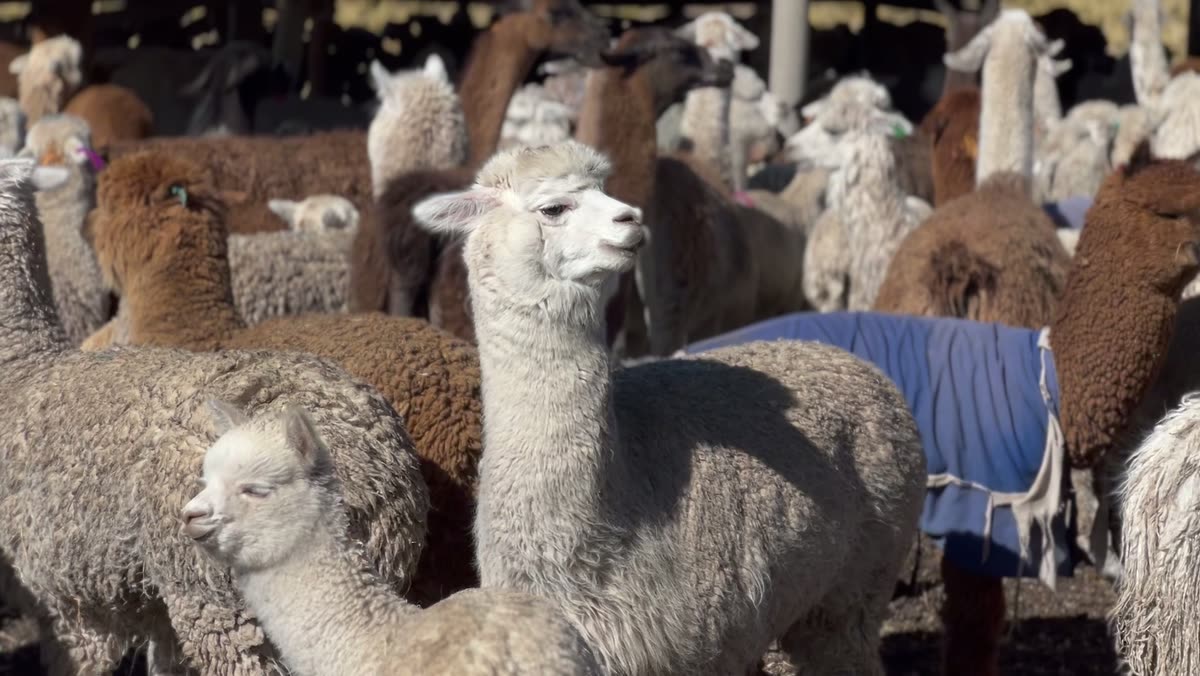
Yes. All our alpacas are compliant and safe. They have been through many tests at an independent accredited laboratory, against the European and the American toy safety standards, EN 71 and ASTM F963, and they have passed every one. Name the standard your market needs and the report comes with your quotation.
A soft toy is safe for a baby when the finished piece passes the tests written for children under three. The age on your label comes from the test report for that piece, so tell us the age group you sell to and the report comes with the quotation.