
### Our story ###
Allin maki is Quechua for a good hand.
It is what you say about someone whose work you would trust with your own. Two words, and the whole business is in them: a piece is not finished when it is assembled, it is finished when the person who made it would put their name on it.
- Founded
- 2011, Lima
- The team
- Family and neighbours
- Made since
- 150,000 pieces
- Fur from
- The highlands, Juliaca
### How alpacas are made ###
From the Andes to your doorstep
-
01
The fur comes down from the herds
Bought from named herding families in the Andean highlands, sack by sack, in the shades that came off the animals that season. Nothing is dyed at this stage and nothing is ordered to a colour. What the season gives is what the year is built from.
-
02
Sorted by natural shade
Alpaca grows in roughly twenty-two shades and they arrive mixed. Every one is sorted against a physical colour standard before anything is cut, because a shade that drifts halfway through a run is the one fault a buyer will find on the shelf and not in the carton.
-
03
Cut, sewn and turned through
The pattern is laid so the pile runs down the body the way it grew, cut to it, then closed inside out on the machine a seam at a time and turned back through the last opening by hand. Long-pile fur has to be worked out of the seam as it goes or the join shows as a bald line. This is the step that decides whether a seam survives a child.
-
04
Filled to a weight
Every size has a fill weight and every piece is weighed against it. It is the difference between a range and a pile of one-offs: the tenth carton has the same heft in the hand as the first, and a buyer reordering next season gets the piece they sold last season.
-
05
The smile, the most important part
Eyes and nose are placed by hand, against the standard, and secured to the pull tests EN 71-1 and ASTM F963 set out. A face that is even slightly off is unpicked and done again, because it is the part nobody can standardise and the part every customer looks at. Allin maki means a good hand. This is the step it is named for.
-
06
Brushed and trimmed to shape
The pile is brushed out and cut last, so the shape is the final decision rather than the first. Monsterfluff is the same piece with this step left undone: the coat exactly as it grew, more fibre, and nobody else making it.
-
Example of alpacas with private tags07
Ready for shipment and checked against the approved order
Seams, fill weight, face, colour and every attached part, piece by piece, against the order you signed off.
### The people ###
A family business, in Lima and in Juliaca.
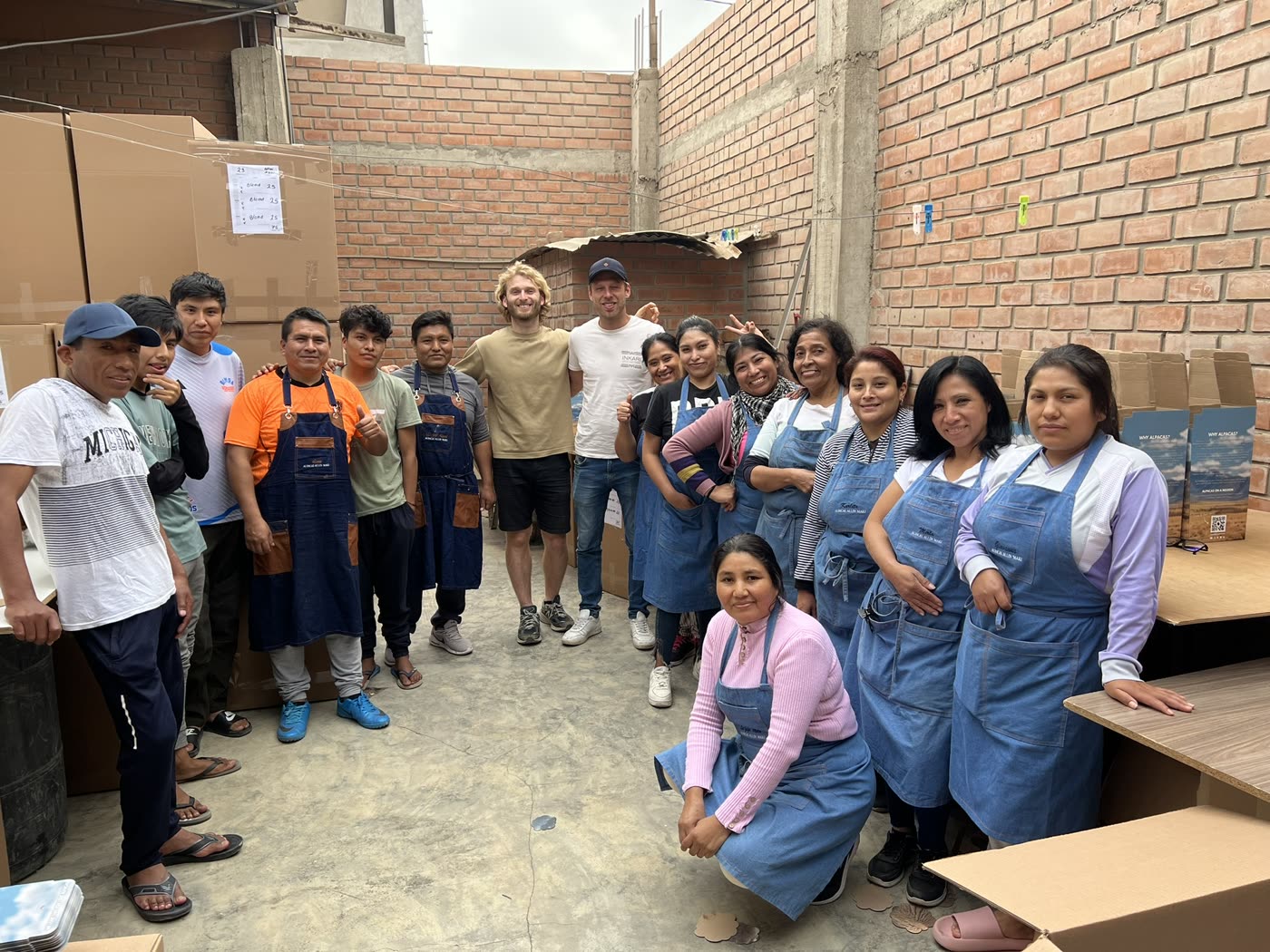
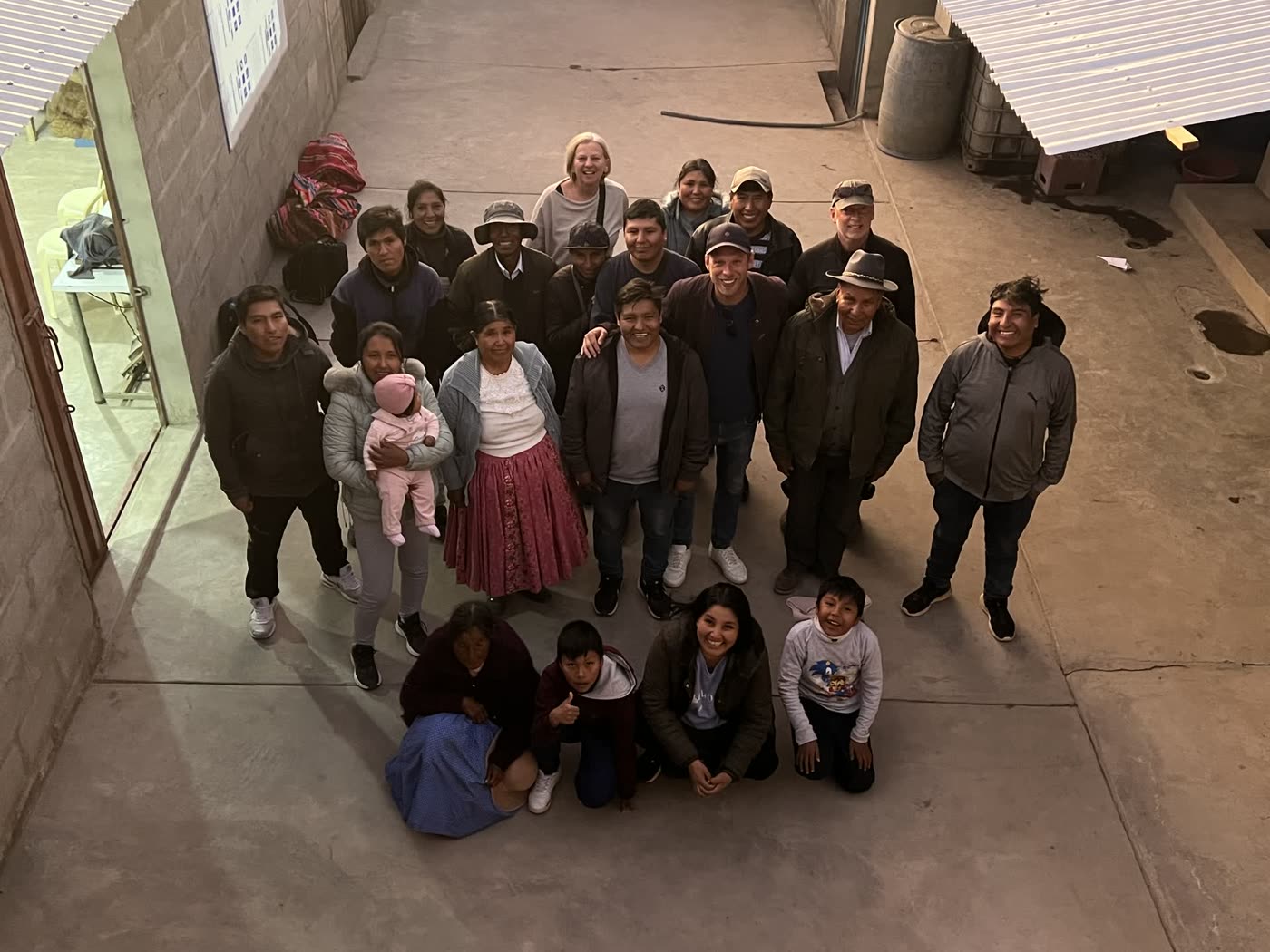
Allin Maki is a family business, and these are the people in it. The fur is bought in the highlands around Juliaca, from the families who keep the herds. Everything after that is done by hand in Lima, in one room, by people who live around it. No agency, no subcontractor and nobody in between: when you order, this is who your order goes to.
### And what we will not do ###
Three things we say no to.
- 01We do not broker other factories' goods.
If it carries our name it was made in this room. When we cannot make something, we say so and you keep your money.
- 02We do not quote a price we cannot hold for the season.
A number that moves between the quotation and the invoice is not a price, it is an opening position. Ours is firm for fourteen days and held for the run.
- 03We do not ask you to take quality on trust.
Ask for the test result and it comes with the quotation. Come and stand at inspection, or send an agency. The door is open and the standards are printed.
Build the mix on the order form and a firm quotation comes back within 24 hours. The door is open too, if you would rather see the workshop first.